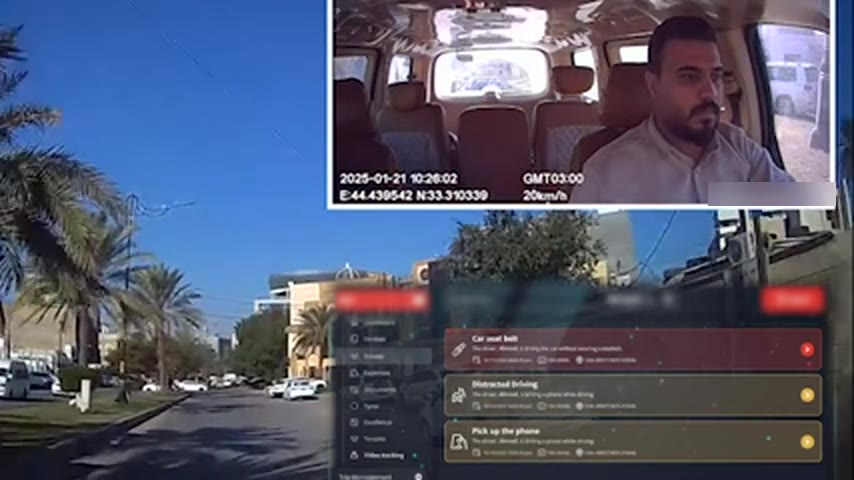





Most accidents are not bad luck. They follow small habits: speeding a little, braking late, checking the phone at the wrong moment. Those habits are easier to change when everyone can see them.
01Measure what matters
A fair driving score looks at speeding, harsh braking, sharp acceleration, cornering and idling. It turns a feeling about who drives well into a number everyone understands.
02Coach with video
Numbers start the conversation; video finishes it. A short clip of a real moment makes coaching specific, calm and fair.
03Know who is driving
When vehicles are shared, a simple driver tag links every trip to the person behind the wheel, so scores, praise and responsibility go to the right person.

Safe drivers save more than lives. They save fuel, tyres and time.
04Best practices
- Set clear speed expectations for every road
- Review scores weekly, not after an accident
- Coach in private, praise in public
- Use video to show, not to punish
- Reward the most improved, not only the best
 On the platformDrivers and safetyKnow who is driving each vehicle, and help every driver improve with a clear, fair score.yamme.iq